Why a Garden Path Changes What You Notice
See how a garden path directs attention through turns, sightlines, and endpoints, then read your route before deciding what the garden needs.
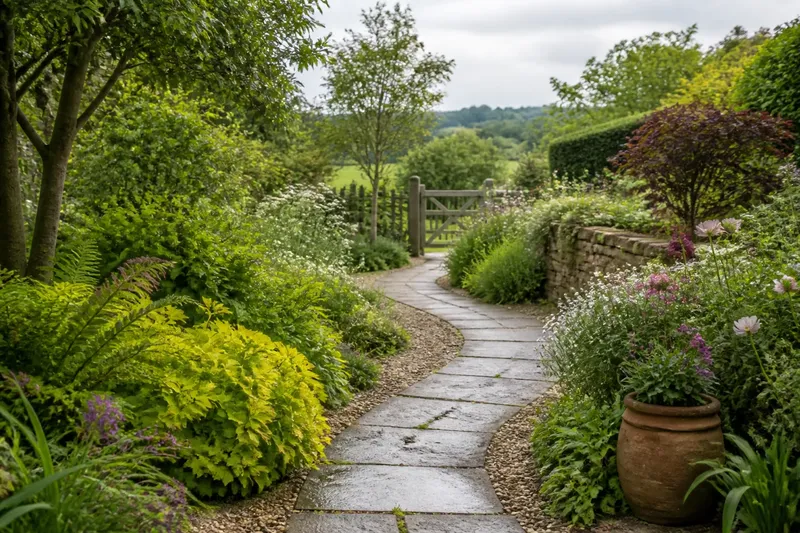
You step onto the garden path to reach the gate, but a bright patch of leaves pulls your gaze toward a border before you get there. A garden path changes what you notice by setting your direction, controlling what appears next, and giving your eyes places to pause. Reading that sequence can reveal how the route shapes the garden before you move a stone or prune a plant.
The route as frame
A path is more than a strip of ground between destinations. It gives your body a direction and a pace, and those choices shape where your eyes go. A straight run tends to make the far end easy to see. A bend delays the view beyond it. A narrow route can bring nearby plants close, while an open stretch leaves more room for the broader scene.
Think of walking as a series of views rather than one fixed panorama. At each point, some things sit in front, some appear at the sides, and others are hidden. The route links those views. Its effect depends on its shape, what stands beside it, and what lies ahead.
Two paths through the same garden can make it feel different. One might lead your eye toward a bench, tree, or doorway. Another might bring a low border into view first, then reveal the larger garden gradually. Neither route is automatically better. Each sets a different order of attention.
Direction and distance
Direction tells visitors where to look first. If a path points toward a strong feature, such as a gate or a tree with a distinctive canopy, that feature can become the visual destination before anyone reaches it. The effect does not require a formal axis. A line in the paving, the edge of a lawn, or the alignment of nearby trunks can reinforce the sense of travel.
Distance changes the character of that invitation. A visible endpoint may feel close and direct, or it may remain distant while the path carries the eye toward it. Along the way, plants and garden objects can interrupt the view. A low pot might become a near focus; a hedge opening might suggest another space beyond. The eye often moves between these layers rather than settling on the endpoint alone.
Notice what competes with the direction of travel. A bright flower, a reflective window, or a sculpture beside the route may catch your attention more strongly than the destination. That can be welcome: a path does not need to behave like an arrow. But if the intended focus is hard to see, consider whether a distraction, an obstructed sightline, or the direction of the path itself explains why.
Turns and delayed views
A turn changes what a visitor can see from one moment to the next. A gentle curve may keep the route visible while concealing some of the garden ahead. A sharper bend can create a more distinct before-and-after view. The change is not simply about surprise; it also affects how much time a walker has to notice plants at the edge of the route.
Look at the view just before a turn, at the turn, and immediately after it. Is there something worth seeing at the bend, such as a change in foliage, a small seat, or a view across an open area? Or does the turn feel like a blank interruption? A turning point can be a place of attention, not just a way to redirect feet.
Imagine a path curving behind shrubs, with a plain fence visible as soon as you round the bend. If you want the turn to feel inviting, first check what can be seen from the approach and whether the fence dominates the reveal. A container near the bend or a view toward a more interesting part of the garden could offer another point of focus while keeping the route clear. Not every turn needs decoration; the view after it affects how the turn feels.
Endpoints and pauses
The end of a path gives the route a sense of purpose. It might terminate at a gate, a bench, a doorway, a water feature, or an open patch of lawn. Sometimes the apparent endpoint is a view rather than a place to stand. Ask whether the destination is visible from the approach and whether it invites a pause or signals that the visitor should continue elsewhere.
A path can also seem to end without actually stopping. It may meet another route, disappear behind planting, or merge into a terrace. These transitions influence how people move through the garden. A clear connection encourages onward travel. A tucked-away endpoint may make a small area feel set apart, provided the route remains legible.
Check the space around the destination as carefully as the destination itself. A bench facing a blank wall draws attention to that wall. Turn it toward a view, and the eye has somewhere else to rest. A gate that opens onto a narrow passage makes the path feel more like a connector than a place to linger. The route’s final impression comes from what is visible at the end and what a visitor can comfortably do there.
Garden path questions?
How do I read a garden path before changing it?
Walk it at an ordinary pace and note what first catches your eye, where your view changes, and where you naturally slow down. Then walk back the other way, since a route can frame different views in each direction.
Does a curved path always feel more interesting?
No. A curve matters because it changes the timing and direction of views, not simply because it is curved. If it hides an appealing destination or leads to an unremarkable view, the shape alone may not create a satisfying walk.
What makes a path endpoint feel clear?
A visible destination, a change in surface, or a connection to another space can tell visitors what the route is doing. If none is apparent, the path may feel as though it stops by accident, even when the next space is close.
Should I add a focal point beside a path?
Only if it supports the view you want to create. A focal point can reward a pause or draw attention away from an awkward sightline, but several competing objects may make the route feel visually busy.
Reading the route
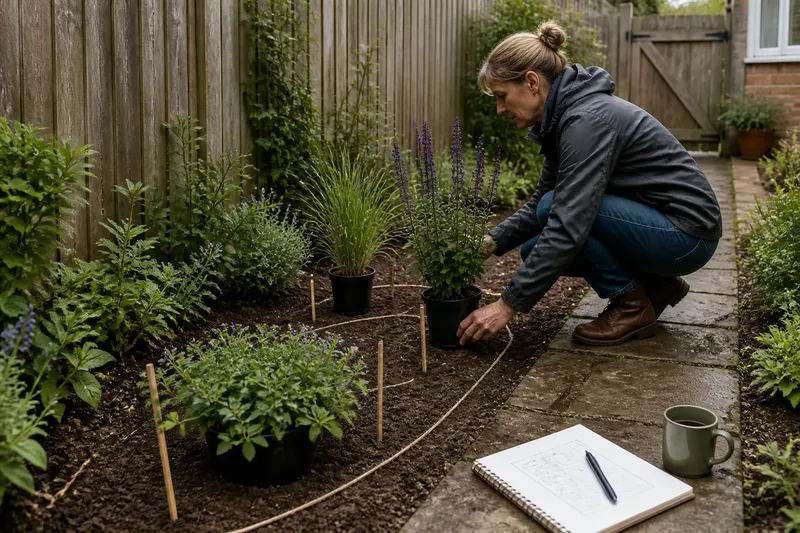
Before considering changes, take a slow walk and record the route’s sequence. Use a notebook, a simple sketch, or notes on your phone. Keep observations concrete: write what is visible, where it appears, and what you do as you reach it. Avoid deciding immediately that a spot needs a new feature.
- At the entrance: Check whether the path’s direction is easy to read. If it is, keep the entrance clear; if not, look for a visible cue along the route, such as its paving edge or a destination in view.
- Along a straight stretch: Check the strongest distant view and the most noticeable objects near the edges. If the destination is easy to see, leave the sightline open; if an unrelated object pulls focus, consider moving that object before changing the path.
- Before each turn: Check what the bend hides and what remains visible as you approach. If the next view is partly revealed, preserve that gradual change; if the route seems to vanish, consider a subtle visual cue that makes its direction legible.
- At each turn: Check whether you slow down, look to one side, or continue without pausing. If you naturally pause, keep the turn uncluttered; if it feels like a blank interruption, consider whether a nearby view or existing plant can give it interest.
- Just beyond each turn: Check the first view that opens up and whether it feels connected to the route. If it leads the eye onward, preserve that view; if it lands on an unhelpful feature, consider screening or shifting attention without narrowing the walking space.
- At the endpoint: Check what the path appears to lead toward and whether the destination suggests stopping or continuing. If the purpose is clear, keep the approach open; if it is not, consider clarifying the connection or making the intended destination visible.
- On the return walk: Check which feature becomes more prominent from the opposite direction. If the return view feels balanced, leave it alone; if one feature overwhelms the route, consider a small adjustment to that sightline rather than altering the whole path.
Say you walk a path from a patio to a side gate, with a turn behind a hydrangea and a bright ceramic pot visible near the gate. From the patio, the pot catches your eye before the turn, while the gate stays hidden. You note that the route is clear underfoot, but the first reveal after the bend is the pot rather than the destination. On the return walk, the gate is easy to see and the pot no longer dominates. You temporarily move the pot farther from the bend, then walk the route in both directions again. If the gate becomes easier to notice without making the bend feel empty, you have a useful small adjustment; if the pot still draws the eye or the view feels bare, return it and consider whether the planting or the path’s alignment is the larger issue. These are imagined starting details and possible observations, not a report of a real garden.
These notes help separate a path’s physical condition from its visual role. A rough surface might need attention for practical reasons, while a route that feels dull may need no material change. It might simply lack a clear view at its bend, or it may already lead the eye toward the right destination but be easy to overlook on the first pass.
Choosing a small change
Once you have read the route, choose one point to address. If the endpoint is hard to notice, consider whether its surrounding view could be clearer. If a turn feels abrupt, look for a nearby feature that makes the change in direction feel intentional. If the path draws attention to an unhelpful view, consider whether the issue comes from the route’s alignment or from what sits within that sightline.
Make the smallest useful adjustment first, then walk the route again. A movable container or a temporary marker can help you imagine a different visual emphasis without committing to a permanent change. Keep the question narrow: does the intended feature appear at a better point in the walk? This keeps attention on the path’s sequence instead of treating every quiet stretch as a problem to fill.
Read the garden path from both directions and at more than one pace. A hurried trip to the gate and a slow walk to a seat may reveal different priorities. The most useful route is not necessarily the one with the most twists or focal points; it is the one whose views, pauses, and destination suit how you want to move through the garden.